Review of “Cold War, Hot Autumn” (2025)
by Sabine Schiffner
A childhood in Tunisia full of beatings and humiliation. Jail stays because of her speeches and poems, decades of living and writing in exile because of her political work as a feminist and human rights activist and yet raising three sons alone, in a writer's life with a lot of illness and loneliness: Najet Adouani is a Tunisian writer, poet and journalist who has been living in Berlin for almost ten years, where she was a long-time scholarship holder of the German PEN's Writers in Exile program.
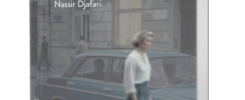
In her latest publication, the Kreuzberg diary "Cold War. Hot Autumn", which has just been published by Sujet Verlag, she describes her life in diary form, starting on September 21, 2022 and ending on February 28, 2023.
At this time, Corona is still a present topic in the run-down Berlin rental house in the middle of Kreuzberg where Adouani lives and where all the lost-looking, poor people who have been torn out of society eke out their lives. But these people also stick together and meet each other, on the street, while holding doors, in the café. Terminally ill actors, lonely old women, people suffering from dementia - these are the people with whom Adouani interacts every day when she leaves her writing retreat, goes for a walk in her neighborhood, goes to a restaurant or goes to a park. But at the same time they are also people with a great artistic past, garbage collectors who are celebrated by the neighbors and a loyal friend who picks them up for walks almost every day.
Adouani draws a lot of resilience from her observations of precarious life situations. And her encounters with these people from Kreuzberg often give her opportunities to reflect on her own experiences and memories of her childhood and youth in Tunisia. Despite all the horror that she describes in relation to her past and especially her suffering in a society dominated by men and machismo, there are also some beautiful and wonderful things to report. In particular, the description of her atheist and loving grandmother and the description of sunsets and sunrises and nature make it easy for readers to understand why, despite all her wounds, the author still longingly and thoughtfully stays in Tunisia, even though she has been away from there for so long.
And you gain an understanding of life as an exile abroad after reading this book, which vividly describes, as never before read, the feelings and thoughts of a woman, mother, daughter and poet who lives in exile in Germany and knows that she will not be able to lead an economically successful life or possibly return home, but who still tries to make the best of it and draw positive strength from small encounters. But this also means that she repeatedly shouts out her anger and frustration about the circumstances and also about false friendships that have already been her downfall in Tunisia.
Seeing Kreuzberg through Adouani's eyes opens up a whole new world that you've never seen before. Sometimes it seems like a movie, which is often a sad, but sometimes very happy truth. In these five months, Adouani has written a deeply moving, unfortunate and truthful portrait of her neighborhood and her life.