Radio interview with Nassir Djafari (hr2)

This May (2026), the author Nassir Djafari spoke to the hr2 culture program “Am Afternoon” about his fourth novel, Thousand Windows, published by Sujet Verlag. The conversation is about “survival under repressive regimes and the fluctuation between fleeing and staying” (hr2-kultur). With “A Thousand Windows” Nassir Djafari tells the moving story of love in the shadow of political upheaval. Djafari paints a haunting picture of flight, exile and the torn between leaving and staying. “A Thousand Windows” is a novel about love, loss and the

Continue reading »

Review of “Love in the Shadow of Dark Flags” by Hassim Youssef

Review of “Love in the Shadow of Dark Flags” (2025) by Martina Häusler for the Borromeo Association The love of a young couple gives hope despite the horror of war. Rodi is in love, his eyes are witnesses. But where is there room for love when danger threatens from all sides? IS fighters from all over the world want to take over the Kurdish city of Kobane, and the city's residents, including many young women, are taking up arms. When Rodi's father falls victim to an attack, the family's world collapses

Continue reading »

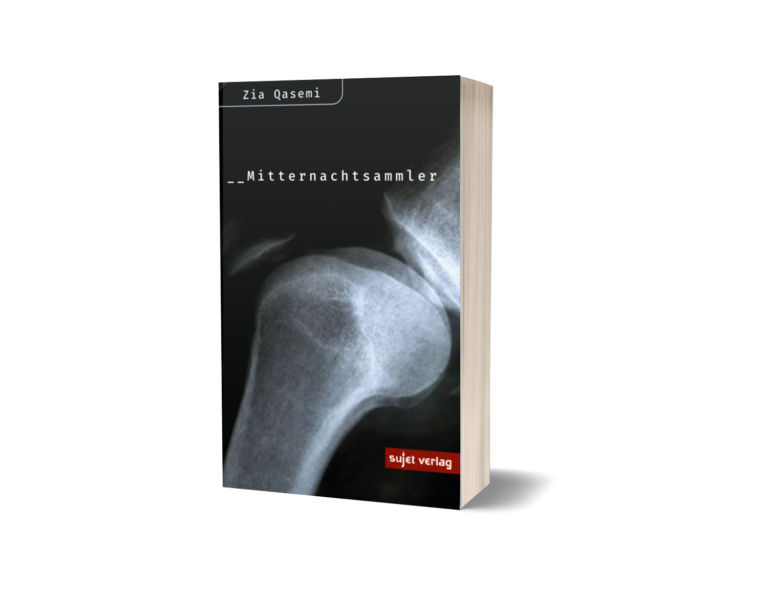
Review of “Midnight Collector” by Zia Qasemi

Review of “Midnight Collector” (2025) by Martina Häusler for the Borromäusverein Authentic picture of life in a small village in Afghanistan through the ages. Musa can only move by crawling due to a deformity in her legs. For the villagers he is therefore an outsider, is ridiculed and, if a misfortune occurs in his presence, is associated with it and avoided. Only the beautiful Muness is friendly to him and praises him for his efficiency and courage, but she drowns in the fairy spring. After

Continue reading »

Heart projects 2026

Literature opens up spaces in which different experiences, memories and perspectives enter into dialogue with one another. With the upcoming releases in 2026, we want to make international voices visible and cross cultural boundaries. This year's heart projects combine novels, poetry and literary translations from Persian-speaking countries. They tell of migration and memory, of mysticism and nature, of female voices in literary history and of the power of poetic language. With authors such as Nastaran Makaremi, Fariba Vafi and Sohrab Sepehri as well as the editors and translators Ali Abdollahi

Continue reading »

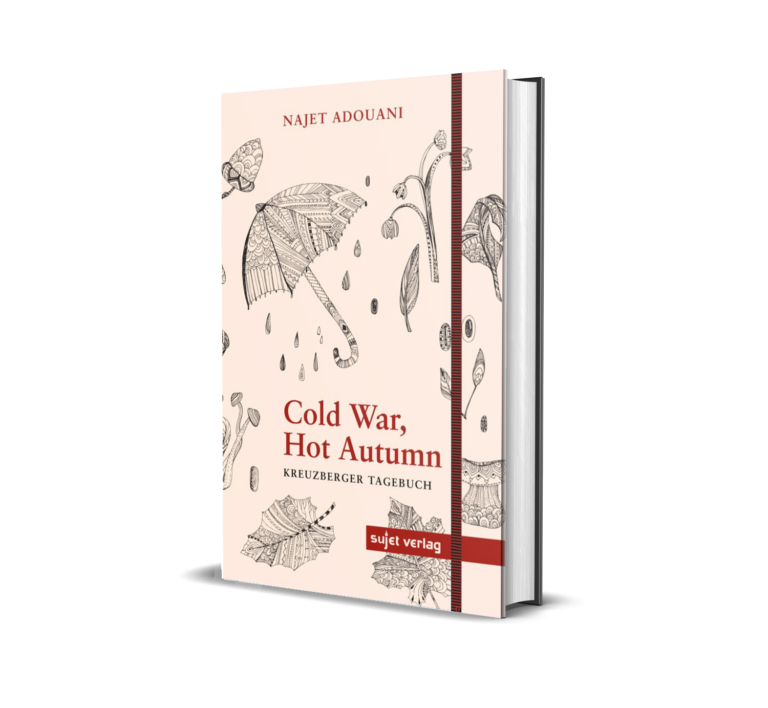
Review of “Cold War, Hot Autumn” by Najet Adouani

Review of “Cold War, Hot Autumn” (2025) by Sabine Schiffner A childhood in Tunisia full of beatings and humiliation. Jail stays because of her speeches and poems, decades of living and writing in exile because of her political work as a feminist and human rights activist and yet raising three sons alone, in a writer's life with a lot of illness and loneliness: Najet Adouani is a Tunisian writer, poet and journalist who has been living in Berlin for almost ten years, where she was a long-time scholarship holder of the German PEN's Writers in Exile program. In hers

Continue reading »

Review of the novel “A Thousand Windows” by Nassir Djafari

Review of “A Thousand Windows” (2026) by Gerrit Wustmann Flight, migration and exile are topics that will continue to concern us as long as despots rule states and do not tolerate any opposition to their power politics. That's why people from Syria fled to Europe, that's why people from Ukraine, which was attacked by Russia, came to Germany, and if we allow right-wing extremists to gain power in this country, people will have to flee Germany. These are topics that concern the writer Nassir Djafari, who was born in Iran in 1952 and came to Germany at the age of five

Continue reading »

Review of the novel “Life in German” by David Scrase

Review Autobiography David Scrase by Wolfgang Menzel Just two days after Wilhelm Lehmann died on November 17, 1968 in Eckernförde, an obituary appeared in the London daily newspaper “The Times”. The author of the obituary, David Scrase, describes how this international recognition came about in his autobiography “Life in German”: A young English German scholar, in his late twenties, a temporary lecturer in German at Oxford and also working on his dissertation on Wilhelm Lehmann, receives a telephone call from friends in Bremen saying they had heard on the radio that Lehmann was

Continue reading »

Book review and review of the novel “Love in the Shadow of Dark Flags” by Halim Youssef – Muse Sheets

A detailed review of the novel “Love in the Shadow of Dark Flags” by Halim Youssef has been published in the Musenblatt. The novel, published in German in 2025, takes up the events surrounding the attack by the so-called Islamic State on the city of Kobane in 2014 and combines historical experience with a personal, literary perspective. Youssef, who has lived in Germany for many years, talks about love, loss and resilience in times of war and existential threat. The review of Musenblatt particularly appreciates the penetrating inside view

Continue reading »

Article on Najet Adouani’s “Cold War, Hot Autumn” – Maghreb Magazine

An article about the novel “Cold War, Hot Autumn” by Najet Adouani appeared in the Maghreb Magazine. The novel, published in 2025 (translated from English by Christa Schuenke), takes readers to a Berlin apartment building in Kreuzberg - and right into life in exile. The article in the Maghreb Magazine not only sheds light on the plot of the novel, but also its social dimension. At the center is a poor, multicultural neighborhood, characterized by poverty, addiction and social insecurity - but at the same time also by moments of solidarity,

Continue reading »

Interview with Widad Nabi on “Taking Roots” – Literaturhaus Wiesbaden Support Association

The author Widad Nabi (“Taking Roots”) spoke in the conversation at the Literaturhaus Wiesbaden Support Association about her writing between languages, about motherhood and the question of belonging. The reason for the interview is, among other things, the award of her poem “A Continent Called Body” with the renowned Premio Internazionale Camaiore and the publication of her current volume of essays. In the interview, Widad Nabi not only talks about the surprising experience in Italy, but also about her life between Kurdish, Arabic and German. She describes how language shapes identity

Continue reading »

Article on “Midnight Collector” by Gerrit Wustmann on Qantara

The author Gerrit Wustmann (“Dying in Your Antlers”) has written an article in the online magazine Qantare about the new novel “Midnight Collector” by Zia Qasemi. In this, the journalist not only takes a look at the plot of the novel, but also at its political relevance. Quote from the article: "The story, sometimes told in a fairy-tale style, speaks of faith and superstition as well as the art of interpreting things that seem inexplicable due to a lack of education as signs. It's about finding support in religion, but without

Continue reading »

Atef Abu Saif on the Gaza War at the Frankfurt Book Fair

Atef Abu Saif was a guest at the Frankfurt Book Fair 2025. At the Philippine pavilion there was an intensive conversation with three other authors about the role of literature in times of the Gaza war. There was a report about this event on the News Austria (click here) and msn (click here) pages. Feel free to take a look!

Continue reading »

How to deal with inherited trauma? - Atef Abu Saif at “Twist” on Arte

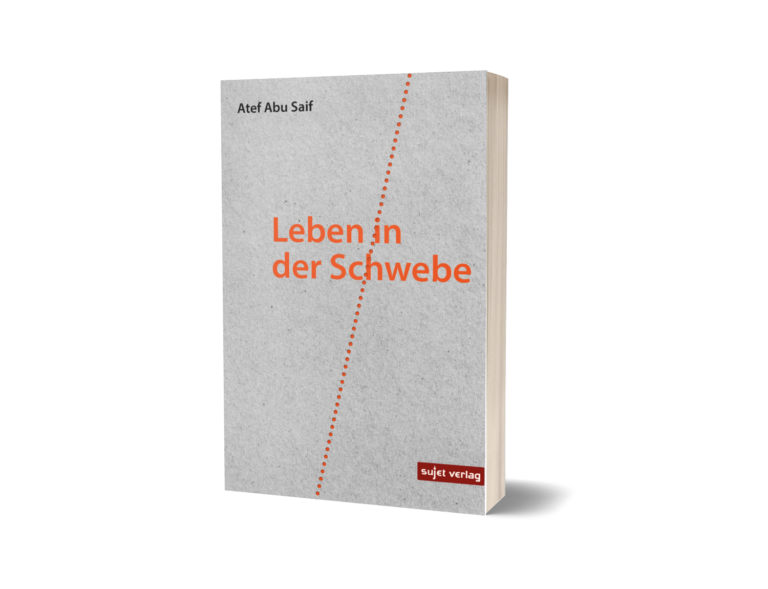
The format "Twist" on Arte has a new episode entitled "How to deal with inherited trauma?" published. It also reports on Atef Abu Saif. As with the other respondents, the contribution shows his life, the creation of his trauma, how it occurs in everyday life and how it ultimately deals with it on an artistic level. The novel “Life in the Schleb” also plays a role in the post. You can find the entire post here. At 22:08 the part begins via Atef

Continue reading »

Review of "Die in your antlers" on Booknerds.de

We are pleased that the author Britta Röder on Booknerds.de wrote a review of "Dying in your antlers" by Gerrit Wustmann. What she finds so bizarre on the book as the short stories play with the reality and expectations of the readers and why she was convinced despite these many surprises can be read here.

Continue reading »

Understand the German review of the blog of the Free German Authors' Association

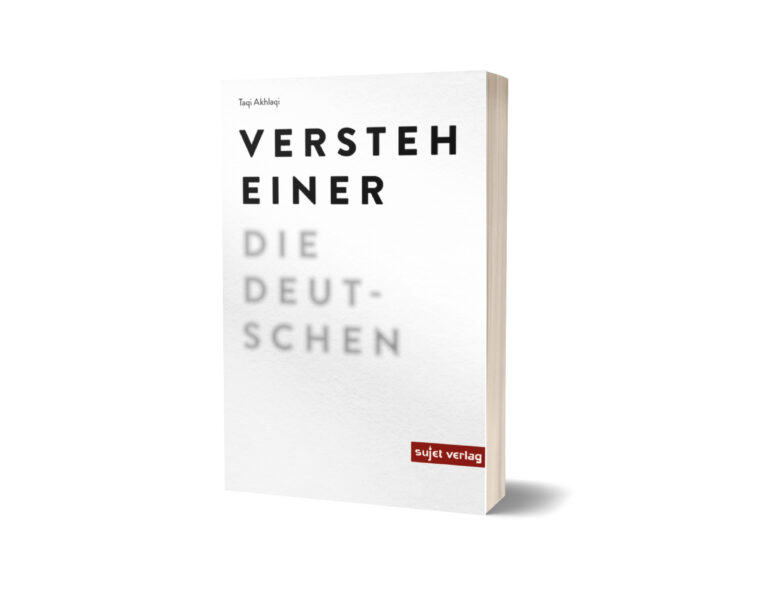
We are pleased that Doctor Manfred Luckas has reviewed the story “Understand the Germans” by Taqi Akhlaqi. He writes about our publisher and the air root literature in general, Taqi Akhlaqis reasons for coming to Germany, the encounter between two cultures and the people and discussions that had to be left behind when leaving home. “In his narrative, he succeeds in relentlessly and at the same time humorist-empathic the deep-sharp analysis of German sensitivities. Anyone who gets involved is rewarded with the gain in knowledge, their own customs, everyday rites

Continue reading »

Review of Doğan Akhanlı's "Sankofa" by @Lettera_tour

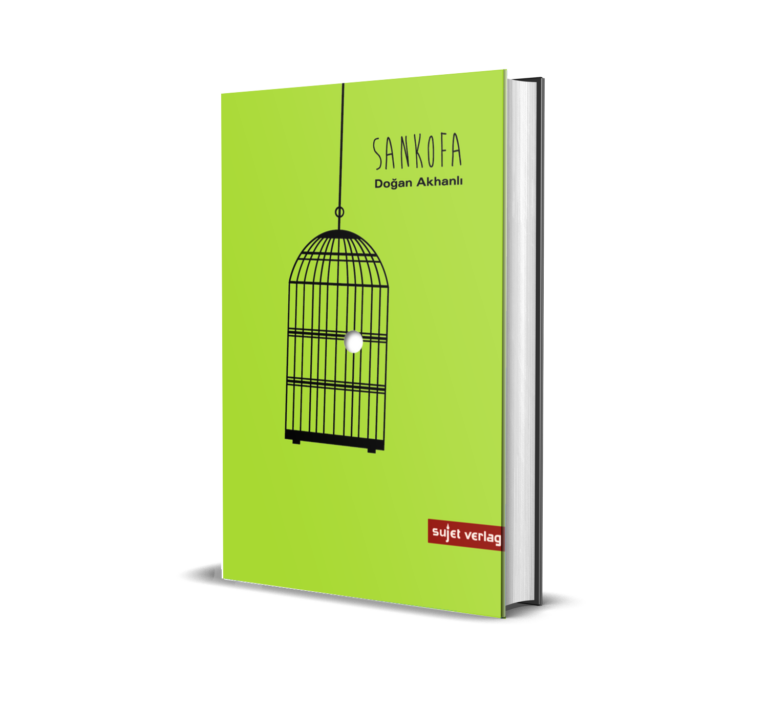
We look forward to a new review of Doğan Akhanlı's book "Sankofa" by Yannick Dreßen @Lettera_tour. . Doğan Akhanlı linked, which at first glance does not seem to fit together - and weaves a great novel! […] The responsible lieutenant goes in search of the escaped and finds 2370 letters that his wife's detainees received from captivity. He begins to read it and soon the words bring a stone in him to roll, a stone that rapidly

Continue reading »

Why behind "world literature" is a western look of Gerrit Wustmann on Qantara.de

Even if hardly anyone likes to admit that, but is a non -western literature in German translation (also here: apart from a few exceptions) a subsidy business that hardly ever carries itself. From: “Books in translation - why behind‘ world literature ’there is often a western look” by Gerrit Wustmann Gerrit Wustmann has published his essay “Books in Translation - Why is a western look behind 'world literature’ ”via Qantara.de. You can read the full text here who wants to dip in Wustmann's views on this topic

Continue reading »

Review of Doğan Akhanlı's "Sankofa" on Kommuch newsletter (KommBuch.com)

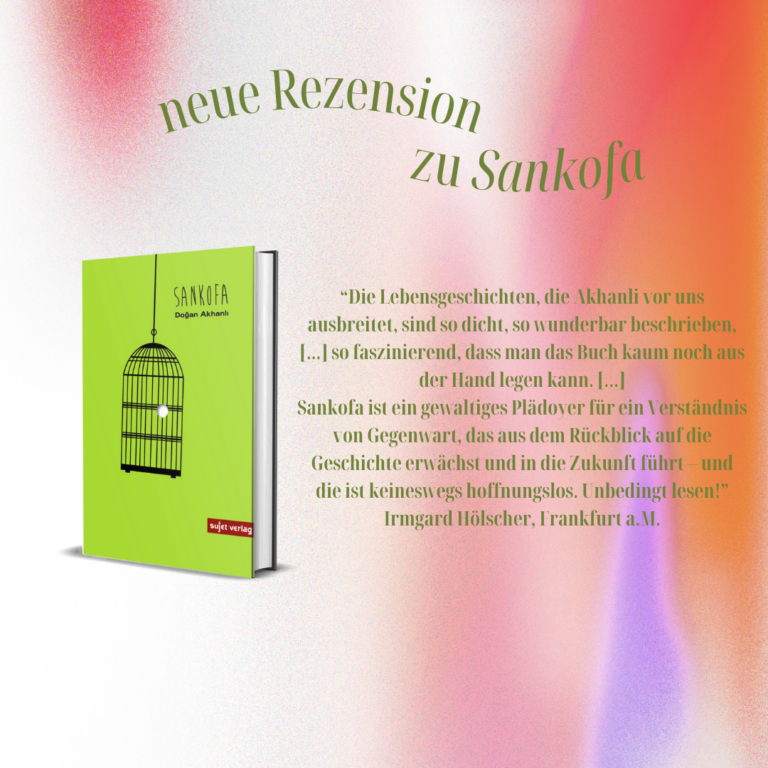
"Sankofa ”is a huge plea for an understanding of the present that grows from the history of history and leads to the future - and that is by no means hopeless. Be sure to read! " -Irmgard Hölscher, Frankfurt a.M. We are very happy about the positive review in the current commuch newsletter for "Sankofa", in which the novel is one of the seven current recommendations! The whole review is available here and if the post has made you curious, you can of course

Continue reading »

Deutschlandfunk Book market - Recai Hallaç to Doğan Akhanlı: "Sankofa"

In the Deutschlandfunk Book market, a very nice contribution was about Doğan Akhanlıs: "Sankofa". There the translator Recai Hallaç talked about the book and the life of Doğan in an interview with Dina Netz. It was an interesting and informative conversation and a must for everyone who has already read the book or are still unsure whether you want to read the book (note: it is definitely worth it) The link to the conversation can be found here

Continue reading »

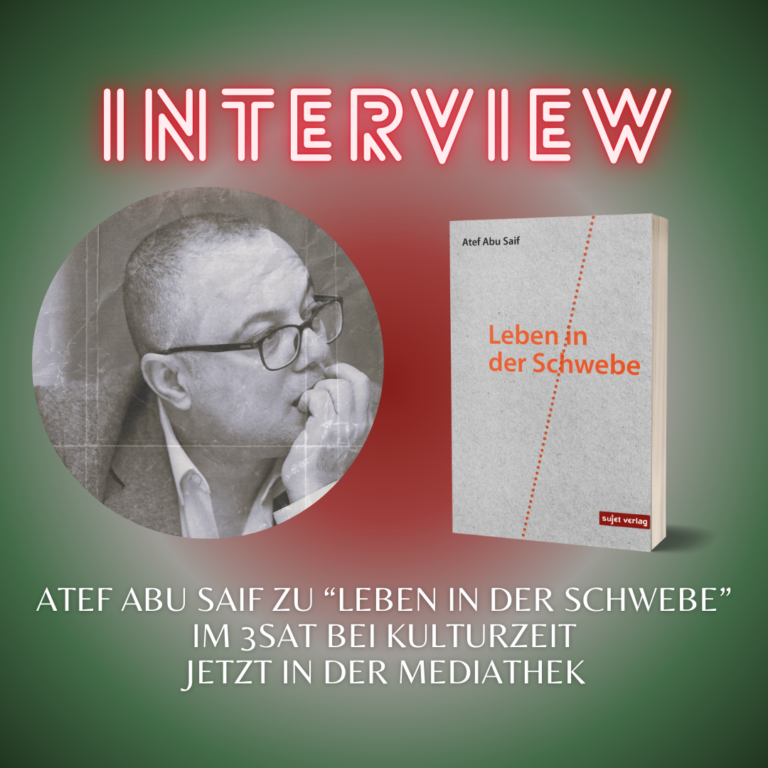
"Hope is like water on the tree of life ” - 3sat Kulturzeit - Contribution to“ Life in the Schleb ” & Interview Mit Atef Abu Saif

Atef Abu Saif's novel “Life in the Schleb” about life in the Gaza Strip first appeared in German, in parallel not only a contribution about the book in the 3sat format culture, but also an interview with Saif itself. “Hope is like water On the tree of life, ”he says, and:“ Writing keeps us alive. ” The full sequence of culture time on Thursday, January 9th, is available in the 3sat media library (minute 9) until April 9, 2025.

Continue reading »

"Sankofa” – Review by Ayse Tekin

"[…] [A] highly complex book, but neither difficult nor strenuous,” says Ayse Tekin about Dogan Akhanli’s “Sankofa”. She notices the strong female characters and is particularly encouraged by the naturalness with which they are integrated into the story. “Sankofa” is a highly political book without making politics the main topic; instead, the diverse characters are at the center of the action. For the full review click here.

Continue reading »

"“Someone understand the Germans” – review by Martin Gerner

"He looks stubbornly and processes his experiences in the host country with irony. It starts with an elementary question for an Afghan in Germany: Why are German toilets so foreign and toilet paper seemingly an imposition? The author’s journey of thought through German worlds begins on the toilet seat.” This is what Martin Gerner writes about Taqi Akhlaqi's novel, which, as the author says, is a book for Germans and not for Afghans. We are very pleased about his contribution to BR24, in which Akhlaqi himself also has his say

Continue reading »